

How to start a small business step by step (even with zero experience)
Most business ideas die quietly. Not because they were bad ideas, but because the person behind them didn’t know what to do next.
Most business ideas die quietly. Not because they were bad ideas, but because the person behind them didn’t know what to do next. They got stuck somewhere between the excitement of the first spark and the reality of making something people would actually pay for. They overthought the plan, underthought the customer, spent money in the wrong places, or waited so long for perfect conditions that the window closed.
This guide is built to prevent that. It walks through the full journey from raw idea to working business, step by step, with enough depth that you can actually execute, not just nod along. It covers what to do, how to think about it, and where most people go wrong. Whether you’re building a service business, launching a product, or testing a side project that could become something real, the process is the same: find a problem worth solving, prove that people care, build the smallest version that works, and launch it before you run out of momentum.
You don’t need an MBA. You don’t need a perfect plan. You need a clear problem, a real customer, a simple first version, and the discipline to learn from what happens next.
Explore the guide
Jump to the stage you’re working through now, or read from top to bottom.
- Start with a problem people already want solved
- Talk to real customers before you build anything
- Study the competition — but don't copy it
- Choose a business model that fits the customer
- Build the smallest version that proves the promise
- Write a lean business plan
- Handle registration, taxes, and permits early
- Build a brand people can understand in 10 seconds
- Create an online presence that earns trust
- Plan the launch as a sequence, not a moment
- Track the signals that actually matter
- Improve the offer after the first customers
- The mistakes that stall most new businesses
- Final thoughts
Contents
1. Start with a problem people already want solved
Every strong business begins with a specific person and a specific frustration. That sounds obvious, but most first-time entrepreneurs skip this step entirely. They start with a product idea, like an app or a service, and then go looking for people who might want it. That’s backwards. The strongest businesses start by watching how people already behave and noticing where the friction, waste, or frustration lives.
“People need better shoes” is not a business idea. It’s a vague category. “Nurses need comfortable shoes that can handle 12-hour shifts on hard floors without breaking down after three months” is a business idea. It gives you a real person, a real situation, a measurable pain point, and a reason the current options fall short.
Before you go any further, answer three questions honestly. First, who specifically has this problem? Not “everyone” or “small businesses” — a real, describable person whose daily life involves this frustration. Second, how are they dealing with it right now? If they’re already spending time, money, or effort on workarounds, that’s a strong signal. It means the pain is real enough to act on. If they shrug and say “it’s not that big a deal,” you may not have a strong enough problem. Third, what would make them switch from what they’re doing now to something new? Switching costs are real. People don’t change behaviour just because something is slightly better. They change when the gap between what they have and what they need becomes uncomfortable enough to justify the effort.
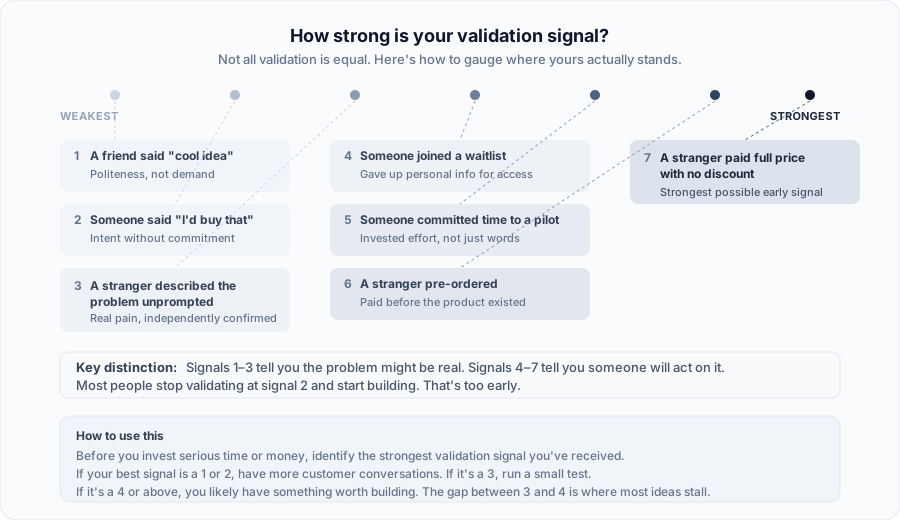
The best validation at this stage isn’t someone telling you your idea is good. It’s evidence that people are already trying to solve the problem with imperfect tools. If they’re duct-taping solutions together from spreadsheets, manual processes, expensive consultants, or products that only half-work, you’re looking at real demand. If they hear your idea and say “that’s interesting” but can’t describe how they currently deal with the problem, you’re probably solving something that doesn’t hurt enough to pay for.
2. Talk to real customers before you build anything
Customer research is the single highest-return activity in the early stages of a business, and it’s the one most people skip because it feels slower than building. It isn’t. Building something nobody wants is slower. Rebuilding it twice is slower still.
Start with conversations, not surveys. Surveys give you data that feels useful but often hides the real story. Conversations give you texture: the specific words people use to describe their frustrations, the details of how they currently cope, the emotional weight behind their answers. You’re not pitching yet. You’re listening. Your job in these conversations is to understand what the customer does now, what frustrates them about it, what they’ve tried in the past, what worked, what didn’t, and what a better outcome would look like in their own words.
Good questions to ask include things like: “Walk me through how you handle this today.” “What’s the most annoying part of the process?” “What happens if you don’t solve it — what does that cost you?” “Have you paid for anything to fix this before, and how did that go?” “If something better existed, what would make you willing to try it?” These questions work because they focus on actual behaviour, not hypothetical interest. “Would you buy this?” is a nearly useless question because most people say yes to be polite. “I already spend $200 a month trying to fix this” is a much stronger signal because it describes what someone has already done with real money.
Aim for at least 10 to 15 conversations before you commit to building. Five is a start, but patterns usually don’t become clear until you’ve talked to enough people to notice the same frustrations, language, and workarounds showing up repeatedly. When three different people describe the same problem in almost the same words, you’re onto something. When everyone describes a different problem, you need to narrow your focus.
Where do you find these people? Start with your existing network. Ask friends, colleagues, and professional contacts if they know someone who fits the profile. Post in relevant online communities and explain that you’re researching a problem, not selling anything. Attend industry meetups, local business events, or trade shows. If you’re building for a professional audience, LinkedIn outreach works if you keep it short, honest, and focused on learning rather than pitching. The people who agree to talk to you during this phase often become your first customers later, because they already feel invested in the solution.
If you’re building something for a B2B audience and don’t have direct contacts in the industry, Snov.io’s outreach and email-finding tools can help you locate the right people at companies where the problem you’re solving is most likely to exist. It lets you search by job title, department, and company, which is useful when you know who experiences the frustration but don’t have a warm introduction. Keep your outreach message short, honest, and focused entirely on learning. Something like: “I’m researching how [role] teams handle [problem]. Would you be open to a 15-minute call? I’m not selling anything — just trying to understand how this works in practice.” That framing works because it’s true, it respects their time, and it makes clear you’re not going to pitch them.
Keep a record of every conversation. A simple spreadsheet works — one row per person, columns for the problem they described, how they currently handle it, what they’ve tried, what they’d pay, and any exact phrases they used. Those phrases matter. When you write your website copy and marketing materials later, the words your customers use to describe the problem will be far more effective than anything you come up with on your own. If you’d rather keep everything in one system from the start, HubSpot’s free CRM lets you log contacts, track conversations, and organize notes without paying anything upfront. It’s more structure than most people need at this stage, but if you’re the type who loses track of things in scattered notebooks and sticky notes, having a central place to capture everything can save you from losing insights you’ll need later.
3. Study the competition — but don’t copy it
If competitors already exist in your space, that’s good news. It means someone has already proven that people will pay to solve this problem. Your job isn’t to pretend competitors don’t exist or to panic because they got there first. Your job is to understand what they do well, where they fall short, and what gap exists that you’re better positioned to fill.
Start by listing the direct competitors, the businesses that sell a similar product or service to a similar customer. Then list the indirect alternatives: the workarounds, manual processes, or different categories of products that people use instead. A meal-planning startup doesn’t just compete with other meal-planning apps. It competes with recipe blogs, grocery-store meal kits, asking a friend for dinner ideas, and the habit of just ordering takeout when planning feels like too much effort.
Once you have your list, dig into each one. Study their pricing, their positioning, their reviews, their guarantees, their delivery process, and most importantly, their customer complaints. Online reviews are a goldmine for competitive research because unhappy customers are specific about what went wrong. If you see patterns like slow support, confusing onboarding, features that sound good but don’t work well, or pricing that feels unfair, those patterns may point to your opening. You don’t need to be better at everything. You need to be meaningfully better at the thing your specific customer cares about most.
The best places to find honest competitor feedback are Google Business reviews, Trustpilot, G2 (for software and SaaS), Reddit threads, and industry-specific forums. Don’t just read the one-star reviews — read the three-star ones too. Those tend to be the most balanced and specific because the customer liked parts of the experience but was frustrated by others. That’s where your opportunities hide. You can also learn a lot from a competitor’s own website: how they describe their ideal customer, what they emphasize in their pricing, and what they don’t mention. The gaps in their messaging often reflect gaps in their product.
Avoid the trap of defining your business as “it’s like [competitor] but better.” That’s not positioning. Positioning means choosing who you serve, what you promise, and what you deliberately don’t do. A gym that serves everyone competes on price. A gym built specifically for people over 50 who want to stay mobile and independent competes on relevance. The narrower your focus, the easier it is to explain why someone should choose you.
4. Choose a business model that fits the customer
Before you build anything, decide how the business will make money. This sounds basic, but a surprising number of early-stage entrepreneurs build an offer without thinking clearly about the revenue model, and then struggle to charge for it later.
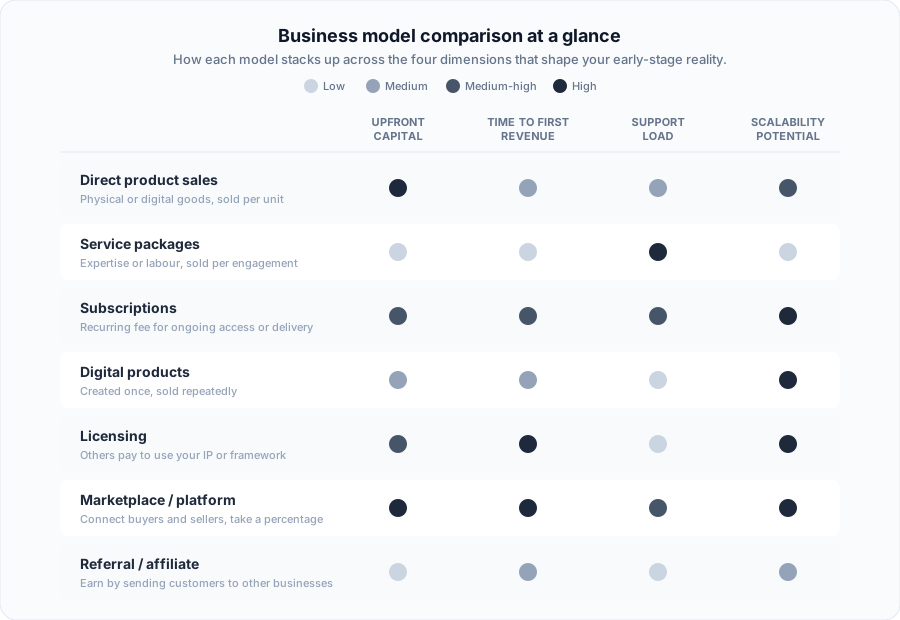
A business model is simply the structure of how value flows: what you sell, who pays, how often, and at what price point. Common models include direct product sales, where customers pay once for a product. Service packages, where customers pay for expertise or labour. Subscriptions, where customers pay a recurring fee for ongoing access. Digital products, where you create something once and sell it repeatedly. Licensing, where you let others use your intellectual property for a fee. Marketplace or platform models, where you connect buyers and sellers and take a percentage. And referral or affiliate revenue, where you earn by sending customers to complementary businesses.
Each model carries different implications for cash flow, support load, sales cycle, and growth. A subscription model gives you predictable recurring revenue but requires you to deliver ongoing value that justifies the recurring charge. A service model can generate revenue quickly but trades time for money unless you find ways to productize. A product model requires upfront investment but can scale without adding proportional labour.
Pick the simplest model that matches your customer and the problem you’re solving. You can add complexity later. At launch, simple is easier to explain, easier to sell, easier to deliver, and easier to improve based on feedback. If you can’t describe how you make money in one sentence, the model is probably too complicated for a first version.
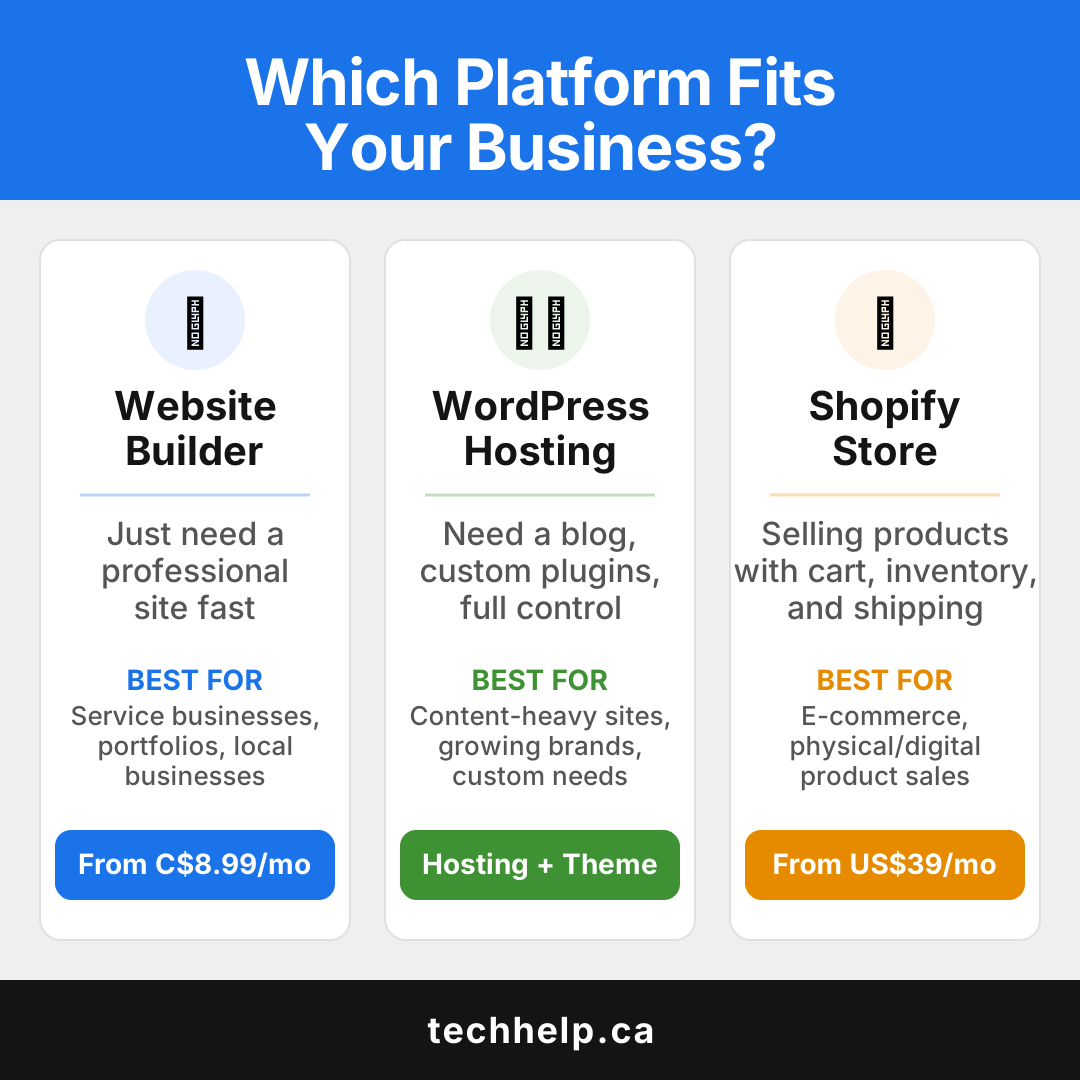
If you’re leaning toward selling physical or digital products online, your business model choice also determines the tools you’ll need. An e-commerce model, for example, works best when you have a platform that handles product listings, payments, shipping, and inventory management in one place. Shopify’s e-commerce platform is built for exactly this — you can launch a functional online store on their Basic plan starting at US$39 a month without writing code or managing separate payment processors. If you’re running a service business or building a content-driven brand instead, you won’t need e-commerce infrastructure at launch. A simple website with a clear offer and a way to collect payments or bookings is enough — the specific tools for that are covered in the sections ahead.
Pricing is part of this decision and deserves more thought than most people give it. The instinct for new businesses is to price low to attract customers, but underpricing creates its own problems. It attracts price-sensitive buyers who churn easily, it signals low value, and it leaves you with margins too thin to invest in improving the product. A better starting point is to price based on the value you deliver relative to the customer’s current cost of the problem, whether that’s measured in money, time, or frustration. If your service saves someone ten hours a week of manual work, pricing it at $50 a month is probably leaving money on the table.
5. Build the smallest version that proves the promise
The concept of a minimum viable product, or MVP, gets misunderstood constantly. It doesn’t mean a bad version. It doesn’t mean a half-finished product. It means the smallest version that can test whether your core promise creates real value for real people. The extra features, the polished design, the automated workflows can all come later once you know the foundation works.
What this looks like depends entirely on the type of business. For a service business, the MVP might be delivering the service manually to a handful of early customers. A bookkeeping service doesn’t need custom software on day one. It needs a few clients, a solid process, and a way to collect feedback on whether the work is accurate, timely, and worth the price. For a product business, it might be a prototype, a pre-order page that tests demand before manufacturing, a sample batch sold through a simple online store, or a limited first run distributed to a small test group. For a digital product, it might be a single well-made template, guide, or tool rather than a full library.
The point of the MVP is speed to learning. Every week you spend building features nobody asked for is a week you’re not learning whether the core idea works. The meal-planning service doesn’t need a custom app with AI-generated grocery lists on day one. It needs a landing page, a sample meal plan, a payment method, and five early customers willing to try it and tell you what worked and what didn’t. If those five people love the plans but hate the format, that’s useful. If they love the format but never actually cook the meals, that’s a different problem. You can’t learn any of this by building in isolation.
Every week you spend building features nobody asked for is a week you’re not learning whether the core idea works.
For most businesses, the MVP starts with a simple website — one page that explains what you do, who you do it for, and how to take the next step. You don’t need a developer for this. Tech Help Canada’s Website Builder includes hosting, SSL, and mobile-responsive design starting at C$8.99 a month, with no code required. If you’re selling products online and need a shopping cart with inventory management, Shopify’s e-commerce platform handles that in one place. And if you already know you’ll need a blog, custom plugins, or the flexibility to grow into a more complex site over time, WordPress paired with a hosting plan gives you that level of control from the start.
Collecting payment is the other piece most people overthink. If you’re selling a service, the simplest option at launch is to send invoices through PayPal or Stripe and let customers pay online. Both platforms take a small percentage per transaction and require no monthly fee on their basic plans. If you’re using a website builder with built-in payment features, the checkout process is already handled. The key is to have a way for someone to pay you before you launch, not after. If the only way to buy from you involves sending an e-transfer or arranging a phone call, you’re creating friction that kills conversions.
A good MVP answers one question clearly: does the core offer create enough value that someone would pay for it and come back? If yes, you have something to build on. If no, you’ve learned that cheaply and can adjust before you’ve invested months of time and thousands of dollars in the wrong direction.
6. Write a lean business plan
A business plan doesn’t have to be a 40-page document full of projections and jargon. For a first launch, it needs to be a clear, honest document that forces you to think through the important questions before you spend real money.
BDC describes a business plan as a practical tool for starting or growing a business, especially when you need lenders, partners, or investors to understand the opportunity. But even if you’re self-funding, writing a plan is worth the effort because it exposes the assumptions you haven’t tested yet. If you can’t explain who the customer is, why they’d buy, or how the numbers work on paper, those gaps will show up much more painfully once you’re live.
A lean business plan covers the core elements without unnecessary padding. Start with the customer and the problem: who you’re serving, what the pain is, and why current options fall short. Then describe the offer and pricing, including what you’re selling, at what price point, and why that price makes sense given the value delivered. Include a section on the market and competitive landscape that covers the size of the opportunity, who else is in the space, and what your angle is. Lay out your sales and marketing approach, focusing on how customers will find you and what the most realistic path is to your first 10, 50, and 100 customers. Describe the delivery process so it’s clear how the product or service actually reaches the customer and what the experience looks like. And finally, cover the financial section: startup costs, monthly operating expenses, revenue projections, and cash-flow assumptions.
The financial section matters more than most new entrepreneurs realize. BDC stresses the value of realistic financial projections and cash-flow forecasts because they force you to confront the math. Even a basic spreadsheet can reveal whether the business needs 10 customers, 100 customers, or 1,000 customers to cover its costs. If the math only works at 1,000 customers and you have no clear path to getting there in a reasonable timeframe, that’s important to know before you launch.
You don’t need expensive software for any of this. BDC offers free business plan templates on their website that walk you through each section with prompts and examples. Google Sheets or Excel handles the financial model — list your estimated startup costs in one tab, your monthly fixed and variable expenses in another, and your revenue assumptions in a third. The point isn’t to predict the future with precision. It’s to stress-test your assumptions so you know where the business model is strong and where it’s fragile before you put real money behind it.
Include a section on risks and backup plans. What are the three or four things that could go wrong, and what would you do if they did? This isn’t pessimism. It’s preparation. Businesses that survive early setbacks usually do so because the founder had already thought about what they’d do if the first plan didn’t work.
7. Handle registration, taxes, and permits early
Legal and administrative setup is not the exciting part of starting a business, but skipping it creates problems that are expensive and stressful to fix later. The specific requirements vary depending on your location, industry, business structure, and scale, so treat this section as a starting framework rather than a complete checklist.
If you’re starting in Canada, Canada.ca outlines several steps to consider before operating a business, including planning your business, choosing a name, registering with the appropriate level of government, applying for necessary permits and licences, and looking into available business support or financing programs. Your exact obligations depend on your province or territory, the legal structure you choose (sole proprietorship, partnership, or corporation), and the nature of the business. A food business, a consulting practice, an online store, and a software company can have very different legal and regulatory requirements even if they’re all based in the same city.
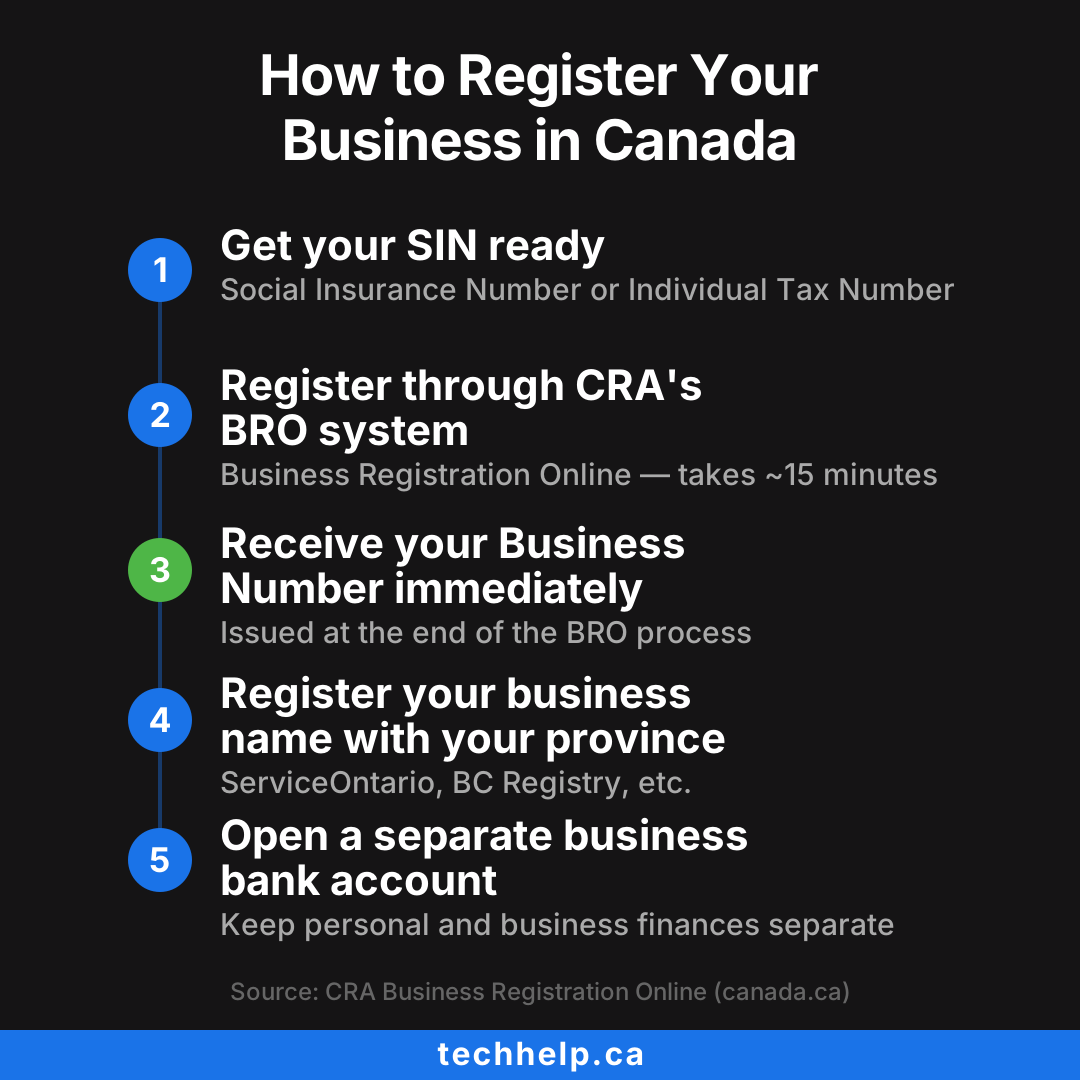
The CRA explains that most businesses need a Business Number, and depending on revenue and operations, you may need to register for program accounts such as GST/HST collection and remittance, payroll deductions if you have employees, import/export accounts if you sell across borders, or corporate income tax if you’ve incorporated.
Here’s how the registration process actually works. The fastest way to get a Business Number is through the CRA’s Business Registration Online (BRO) system. You’ll need your Social Insurance Number (or Individual Tax Number), your personal information as it appears on your most recent tax return, and the details of your business including the type of activity, your fiscal year-end date, and the expected revenue range. The process takes about 15 minutes, and you’ll get your Business Number immediately at the end. As of November 2025, the CRA no longer accepts business number registrations by phone, so BRO is now the primary method. You can access it 21 hours a day, seven days a week.
Separately from the federal Business Number, you’ll need to register your business name with your province or territory. In Ontario, for example, you register through the ServiceOntario website. In British Columbia, it’s the BC Registry. Each province has its own process, fees, and requirements. If you’re operating as a sole proprietorship under your own legal name, some provinces don’t require a name registration, but if you’re using a trade name, you’ll almost certainly need one. And if you’re incorporating, that’s a different process entirely — incorporation can be done federally through Corporations Canada or provincially, and the choice affects where you can operate, how much paperwork you’ll handle, and what tax obligations apply. If the distinction between sole proprietorship and incorporation isn’t clear to you, that’s a good reason to spend an hour with an accountant before you decide. The difference in liability protection, tax treatment, and administrative burden is significant enough that getting it wrong can cost you much more than the price of professional advice.
Two important points here. First, don’t guess on taxes and registration. The penalties for getting it wrong are real, and the rules are specific enough that general advice often misses the details that apply to your situation. Check the official requirements through Canada.ca and the CRA, and speak with an accountant or legal professional when the stakes are meaningful, particularly around incorporation decisions, tax obligations, and industry-specific licensing. Second, don’t let this step become a reason to delay. Many new entrepreneurs spend weeks researching legal structures and tax strategies before they’ve validated whether anyone will buy what they’re selling. Handle the essentials early, but don’t let administrative perfectionism replace the more important work of talking to customers and testing the offer.
Don’t let administrative perfectionism replace the more important work of talking to customers and testing the offer.
Open a separate business bank account before you make your first sale. Mixing personal and business finances is one of the most common mistakes new entrepreneurs make, and it creates headaches at tax time, makes bookkeeping harder, and can weaken your liability protection if you’ve incorporated. Most Canadian banks offer small business accounts, and some have no-fee options for the first year.
8. Build a brand people can understand in 10 seconds
Branding at the early stage is simpler than most people make it. You don’t need a brand strategy deck, a mood board, or six rounds of logo revisions. You need three things: a clear name, a short explanation of what you do and who it’s for, and a visual identity that doesn’t get in the way.
The name matters, but not as much as you think. It should be easy to say, easy to spell, easy to remember, and available as a domain. Beyond that, the name is less important than the promise behind it. What makes someone remember a brand isn’t the cleverness of the name. It’s the clarity of what the brand stands for. “We help independent restaurants cut food waste by 30% with smarter inventory tools” is more memorable than a clever name with no clear promise attached.
Once you’ve settled on a name, register the domain before you do anything else. Domains cost a few dollars a year, and waiting even a few weeks risks someone else claiming it. Tech Help Canada’s domain registration service lets you search, register, and manage your domain in one place, which simplifies things later when you’re ready to connect it to your website and email. When choosing a domain extension, .com is the most universally recognized, but if you’re running a Canadian business that serves Canadian customers, a .ca domain signals local presence and can help with local search visibility. If both are available, registering both and redirecting one to the other is a worthwhile small investment.
Your next step is professional email. Sending invoices and proposals from a @gmail.com or @outlook.com address isn’t going to sink your business, but it does create a subtle trust gap that you don’t need. Tech Help Canada’s Microsoft 365 plans give you email at your own domain (you@yourbusiness.com), plus the full Office suite, Teams, and 1 TB of cloud storage, with setup support from a Canadian team. If you prefer the Google ecosystem, Google Workspace offers the same custom-domain email through Gmail’s interface, along with Google Drive, Docs, Sheets, and Calendar. Either way, the cost is modest — typically under $10 a month per user — and the credibility difference between you@yourbusiness.com and you@gmail.com is noticeable from the first email you send.
For a logo, you don’t need to hire a designer at this stage. Canva’s free plan has enough templates, fonts, and colour tools to create a clean, usable logo in an afternoon. It won’t be award-winning, but it doesn’t need to be. At launch, your logo needs to look professional and work well at small sizes — on a social media profile, a business card, or a browser tab. You can invest in a custom-designed logo later once you have revenue and a clearer sense of the brand’s personality.
Your brand’s first job is to make the value obvious to someone who has never heard of you. That means your homepage, your social profiles, and your pitch should all communicate the same core message: here’s who we help, here’s the problem we solve, here’s why we’re good at it. If someone visits your website and can’t explain what you do after ten seconds of reading, the messaging needs work.
Tone matters too, and it should match the customer. A playful, high-energy brand can work well if you’re selling to creative professionals or younger consumers who value personality. A more direct, understated tone may work better if the purchase involves significant money, risk, health, or professional trust. The wrong tone doesn’t just fail to attract — it actively repels the people you want.
Keep the first version of the brand simple. A usable logo, a consistent colour palette, a clean typeface, clear messaging, and a professional-looking website are enough to launch credibly. You can refine all of it later once you have real customers and real feedback on what resonates. Spending months and thousands of dollars on branding before you’ve proven the business model is one of the most common ways early entrepreneurs burn through money without getting closer to revenue.
9. Create an online presence that earns trust
Your first website doesn’t need to be elaborate. It needs to do one thing well: help a potential customer decide whether to take the next step. That next step might be booking a call, making a purchase, signing up for a trial, or joining a waitlist. Every element on the page should support that single action.
A strong first page covers five things. First, the offer itself, stated plainly. Second, the audience, described specifically enough that the right person recognizes themselves. Third, the outcome, framed in terms of results rather than features. Fourth, proof of credibility, whether that’s testimonials, credentials, case studies, media mentions, or even a clear explanation of your personal experience with the problem. And fifth, a single obvious call to action that tells the visitor exactly what to do next.
The platform you build on should match the complexity of what you need right now, not what you might need two years from now. If you want a professional website without managing hosting, themes, or plugins yourself, Tech Help Canada’s Website Builder handles that — hosting, SSL, and mobile-responsive design are included in every plan, starting at C$8.99 a month. The Business plan at C$13.99 adds SEO tools and PayPal payments, and the Business Plus plan at C$20.99 includes appointment booking and social media integration. For businesses that need a full online store with cart, inventory, and shipping management, the Online Store plan covers that at C$36.99. If you outgrow what a website builder offers and need custom plugins, advanced integrations, or full design control, Tech Help Canada’s WordPress hosting is the natural next step — it gives you the flexibility of WordPress without needing to find a separate hosting provider.
If you’re already comfortable with WordPress and want to compare hosting options, Bluehost’s web hosting plans and Hostinger’s hosting platform are both popular choices with affordable entry-level pricing and WordPress-specific features. The trade-off is that WordPress gives you more control but also more responsibility — you’ll manage updates, backups, and plugin compatibility yourself, or pay someone to do it. For a first-time business owner who wants to focus on the business rather than website maintenance, a managed website builder is usually the faster path to launch.
If search traffic is part of your longer-term strategy, Google Search Central recommends creating helpful, well-organized content written for users first, and avoiding shortcuts that promise automatic rankings. For an early-stage business, this can be as simple as publishing a few strong pages that answer the questions customers already ask before buying. If you’re a personal trainer launching an online coaching business, writing a thoughtful page on “how to choose an online fitness coach” is more valuable than gaming keywords. It positions you as someone who understands the buyer’s decision and builds trust before you’ve ever spoken. If you’re not sure where to start with SEO, Tech Help Canada’s on-page SEO checklist covers the fundamentals.
Set up tracking from day one so you’re not guessing about what’s working. Google Analytics 4 is free and takes about 15 minutes to install. Go to analytics.google.com, create an account and a property for your website, choose “Web” as your platform, and enter your site’s URL. Leave Enhanced Measurement turned on — it automatically tracks page views, scrolls, outbound clicks, and other interactions without extra setup. Most website builders and WordPress plugins have a simple field where you paste your Google Analytics measurement ID, and you’re done. Within 24 hours, you’ll start seeing data on who’s visiting, where they’re coming from, and what they’re doing on your site. That data shapes every marketing and messaging decision you’ll make from that point forward.
Don’t underestimate the basics. Make sure your site loads quickly, works well on mobile, includes clear contact information, displays a privacy policy if you’re collecting any data, and presents any purchasing policies the buyer needs before committing. These details signal professionalism, and for a business with no track record, professionalism is the first layer of trust.
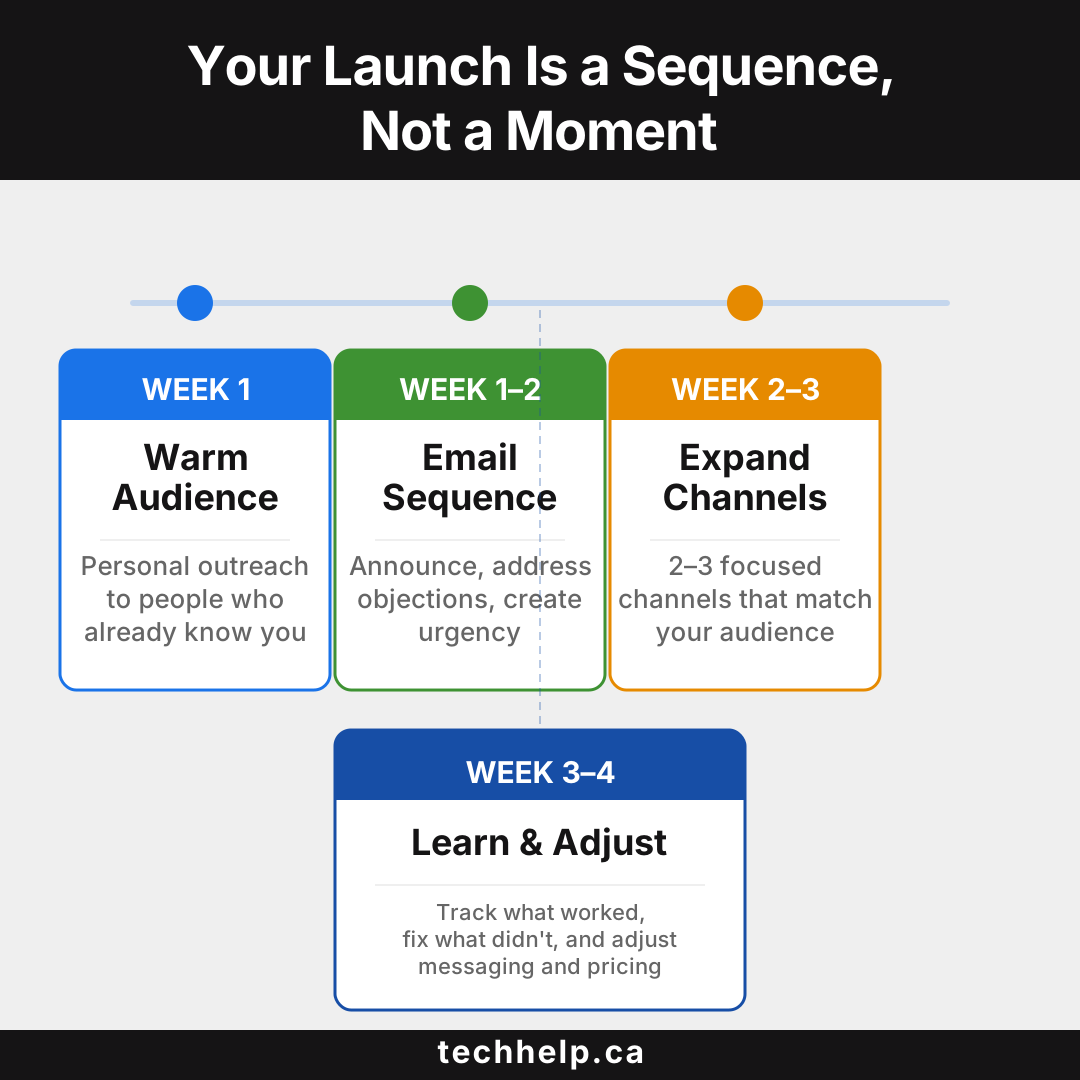
10. Plan the launch as a sequence, not a moment
Most people think of a launch as a single event — the day the website goes live, the moment the product becomes available. In practice, a successful launch is a sequence of actions spread over two to four weeks that moves the right people from awareness to understanding to action.
Start with your warmest audience. These are the people who already know you, trust you, or have expressed interest in what you’re building: the customers you interviewed during research, early testers who tried the MVP, past clients from related work, professional contacts who understand the space, or newsletter subscribers who’ve been following the journey. This group is the easiest to convert and the most likely to give you honest feedback. Reach out personally. Don’t just post on social media and hope they see it.
After the warm launch, expand to the channels that match the offer and the audience. Email outreach, content marketing, targeted social posts, local community outreach, strategic partnerships, webinars, live demos, and small-budget paid advertising can all work depending on the business. The key is focus. Pick two or three channels that make sense for your customer and do them well, rather than spreading yourself thin across every platform.
Email is the single most reliable launch channel for most small businesses, and it doesn’t need to be complicated. MailerLite’s email marketing platform offers a free plan for up to 250 subscribers that includes automation, landing pages, and signup forms — enough to run a full launch sequence without paying for software you haven’t tested. The structure of a basic launch sequence is straightforward: an announcement email that introduces the offer, a follow-up two or three days later that addresses common questions or objections, and a final email near the end of the launch window that creates genuine urgency around a deadline, a limited offer, or a bonus for early customers. You don’t need to send a dozen emails. You need three or four good ones that each say something the reader hasn’t heard yet.
If you built a contact list during your customer research phase, now is the time to use it. A CRM like HubSpot’s free plan lets you organize those contacts, tag them by how you met and what they’re interested in, and track which ones you’ve already reached out to. It handles up to 1,000 contacts with two user seats, which is enough for most launch-stage businesses. The alternative is a spreadsheet, and for a list under 50 people, that works fine. But once you’re managing warm leads, interested prospects, and early customers across different stages of the buying process, a dedicated system keeps things from falling through the cracks.
Give yourself a launch window rather than a single launch day. A two-to-four-week window gives you time to announce, answer questions, handle early feedback, fix unexpected issues, and build momentum. It also lets you treat the launch as a learning event rather than a pass/fail test. If version one of the landing page doesn’t convert well, you have time to adjust the messaging. If the pricing feels wrong after the first few conversations, you can change it before the window closes.
Document what you learn during the launch. Which messages got responses? Which channels produced the best leads? What questions did people ask before buying? What objections came up? This information is more valuable than almost anything you could plan in advance, because it comes from actual market contact rather than assumptions.
11. Track the signals that actually matter
Early metrics should answer two questions: do people understand the offer, and can this business work? Everything else is noise at this stage.
The signals worth watching in the first weeks and months include the number of qualified conversations you’re having with potential customers, your landing-page or sales-page conversion rate, email signups or waitlist additions, pre-orders or early sales, booked calls or demos, refund or cancellation rates, the specific questions customers ask before buying, and the reasons people give when they decide not to buy. If you’re spending money on any form of marketing, track customer acquisition cost from the very beginning. Knowing that it costs you $50 to acquire a customer who pays $40 is critical information that changes how you allocate every dollar.
Resist the urge to obsess over vanity metrics like page views, social media followers, and impressions. These numbers feel good but tell you almost nothing about whether the business is working. A hundred website visitors who all bounce after three seconds is not better than ten visitors who read the full page and two who buy. At the early stage, depth of engagement matters more than breadth of exposure.
If you set up Google Analytics 4 during the website-building phase, you already have access to most of the data you need. The key reports to check weekly are the traffic acquisition report (which shows where visitors come from — search, social, direct, or referral), the pages and screens report (which shows which pages get the most attention and where people drop off), and the conversion events report (which tracks whether visitors take the actions you care about, like clicking a “buy” button or submitting a contact form). You can set up conversion tracking in Google Analytics by marking specific events as conversions — the setup takes five minutes and turns vague traffic numbers into useful performance data.
For tracking the human side — conversations, objections, sales pipeline, and acquisition costs — a CRM gives you more than a spreadsheet can. If you started using HubSpot’s free CRM during the launch phase, you already have a system for this. Log every sales conversation, note the outcome, and tag contacts by where they came from. After a few weeks, you’ll start to see patterns: which channels produce leads that actually convert, which objections come up repeatedly, and what your real cost per customer looks like when you factor in time and money. Those patterns tell you what to double down on, what to cut, and where the offer itself needs to improve.
Don’t panic over small numbers. A tiny launch can teach you an enormous amount if the feedback is specific. If five people bought and three of them tell you the onboarding was confusing, you know exactly what to fix. If fifty people visited the page and none of them bought, look at where they dropped off. Did they read the whole page and leave without clicking, or did they bounce immediately? The pattern tells you whether the problem is the offer, the messaging, the price, or the audience.
12. Improve the offer after the first customers
The first launch is not the finish line. It’s the first real test. Everything before this point was theory and preparation. Now you have actual customers using the product or service, and their experience is the most important data you’ll collect.
After the first customers go through the experience, ask them directly: What almost stopped you from buying? What felt unclear before you committed? What did you expect that was different from what you got? What was better than you expected? What would you change if you could? These questions surface the friction points that are invisible from the inside. You built the experience, so it makes sense to you. The customer came in fresh, and the places where they hesitated, got confused, or felt let down are the exact places where the next version needs to improve.
Prioritize fixes based on impact. If multiple customers mention the same friction point, fix that first, even if it’s not the most technically interesting problem to solve. If customers love the core offer but struggle with onboarding, improve onboarding before you add new features. If they understand the offer but think the price is too high, that might be a pricing problem or it might be a value-communication problem. Talk to more customers before you drop the price reflexively.
Then decide the next move. You might tighten the offer to serve a more specific audience. You might adjust pricing up or down based on what the market is telling you. You might add a structured onboarding process to reduce early confusion. You might create a repeat-purchase or subscription path to improve retention. You might pause or remove a feature that looked good on paper but isn’t pulling its weight in practice. You might double down on the acquisition channel that performed best during launch and cut the ones that didn’t.
Once you have a small group of satisfied customers, build a system for staying in touch with them. A simple email sequence — a check-in after their first purchase, a follow-up a few weeks later asking how things are going, and occasional updates about improvements or new offerings — keeps you top of mind without being intrusive. If you set up MailerLite’s email marketing platform during launch, you already have the automation tools to run this on autopilot. Retention is almost always cheaper than acquisition, and your early customers are also your best source of referrals, testimonials, and case studies.
Retention is almost always cheaper than acquisition, and your early customers are also your best source of referrals, testimonials, and case studies.
Growth at this stage comes from learning faster than you spend. The businesses that survive the first year are rarely the ones with the best initial product. They’re the ones that listen hardest, adjust fastest, and resist the temptation to scale before the foundation is solid.
13. The mistakes that stall most new businesses
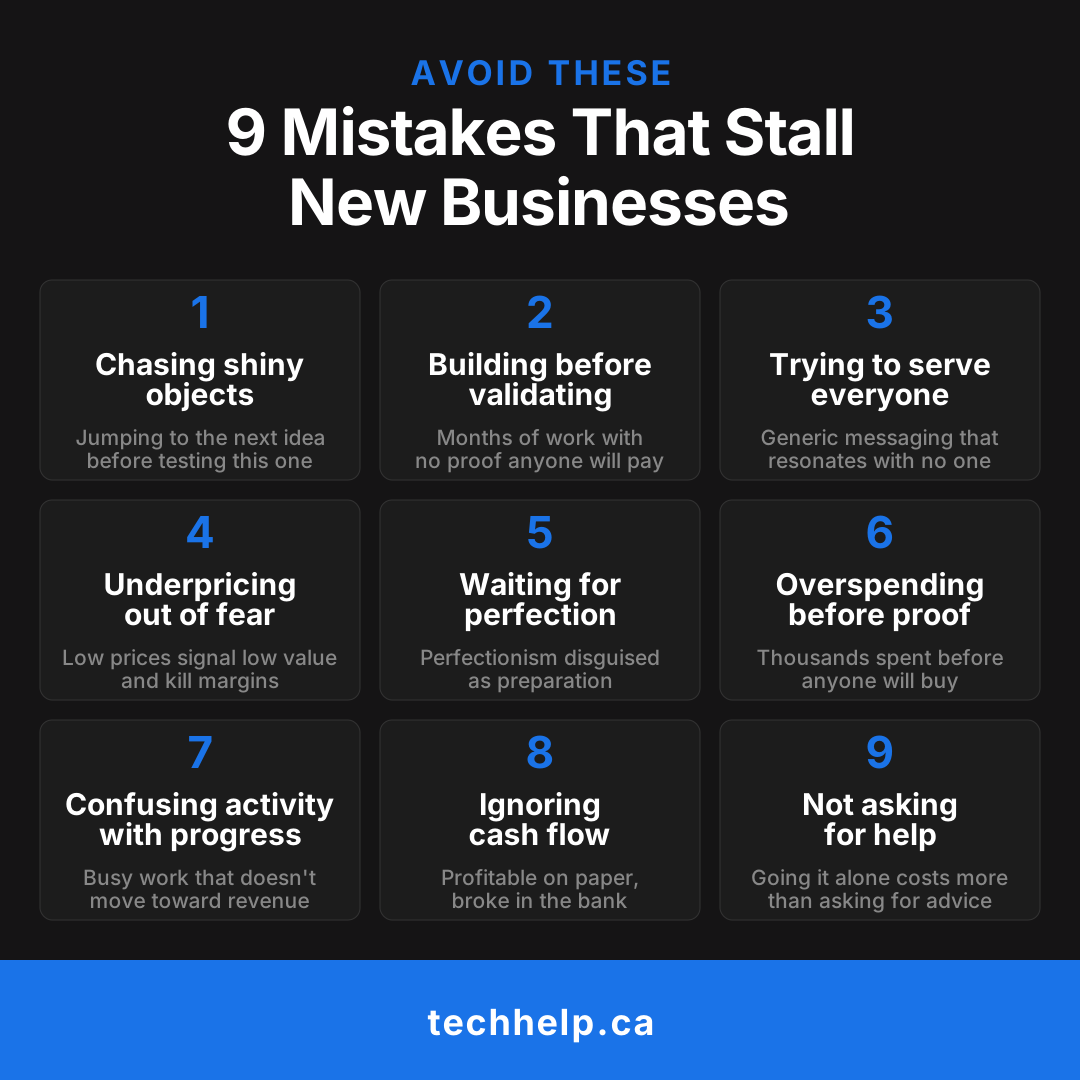
This section exists because knowing the steps isn’t enough. Many businesses that follow a reasonable plan still stall — not because the idea was bad or the market wasn’t there, but because the founder fell into one of a handful of predictable traps. Recognizing them early is one of the highest-leverage things you can do.
Shiny object syndrome
This is the pattern of constantly chasing the next idea, tool, strategy, or trend instead of doing the focused, repetitive work that makes a business grow. It shows up as jumping to a new business idea before the current one has been properly tested, or constantly switching marketing channels before any of them have had time to produce results, or buying new software before you’ve fully used what you already have. The fix isn’t willpower. It’s structure. Set a clear goal for the current phase, define what “done” looks like, and commit to finishing before you evaluate the next shiny thing. Most new businesses don’t fail from lack of ideas. They fail from lack of follow-through on one idea.
Building before validating
This is one of the most expensive mistakes and one of the most common. It happens when someone spends months building a product, designing an app, or creating a course without first confirming that real people will pay for it. The assumption is usually “if I build it, they’ll come.” They almost never do. Validation isn’t about getting friends to say “cool idea.” It’s about getting strangers to put down money, sign up for a waitlist, or commit their time to a pilot. If you can’t get any of those signals before you build, building won’t fix the problem.
Trying to serve everyone
“Our target market is anyone who needs X” is not a positioning strategy. It’s a way of avoiding the hard work of choosing. When you try to serve everyone, your messaging becomes generic, your product becomes bloated, and your marketing becomes inefficient because you’re shouting into a crowd instead of speaking directly to someone who recognizes their own problem in your words. Narrowing your audience feels risky, but it actually makes everything easier. The messaging gets sharper, the product decisions get clearer, and the customers you attract are more likely to stick around because they feel like you built it for them.
Underpricing out of fear
New entrepreneurs frequently set prices too low because they’re afraid no one will buy at a higher price point. The irony is that low prices often hurt sales rather than help them. A $15 consulting session signals that the advice isn’t worth much. A $200 session signals expertise. Pricing communicates value before the customer has experienced the product, so setting it too low can actually reduce trust. If you’re unsure about pricing, start slightly higher than feels comfortable and adjust based on real conversations. It’s easier to offer a discount or adjust down than to raise prices after customers have anchored to a low number.
Waiting for everything to be perfect
Perfectionism disguised as preparation is one of the most common ways businesses never launch. The logo isn’t right yet. The website needs one more page. The product needs one more feature. The business cards haven’t arrived. These are all forms of hiding from the market. At some point, you have to let real people see the real thing and respond to it. The first version will never be perfect, and the feedback you get from launching an imperfect version is more valuable than another month of polishing in private.
Spending too much before proving demand
Some entrepreneurs spend thousands on branding, website design, inventory, office space, and equipment before they’ve confirmed that anyone will buy. This is especially dangerous for product businesses that require upfront investment in manufacturing or inventory. Before you spend heavily, prove the concept with the cheapest possible version. Pre-sell before you manufacture. Offer the service manually before you build the software. Test the idea with real transactions before you invest in infrastructure. Every dollar you spend before validation is a gamble. Every dollar you spend after validation is an investment.
Confusing activity with progress
Being busy and making progress are not the same thing. Redesigning the logo for the third time, tweaking the website copy again, researching one more competitor, reading one more business book. These all feel productive but don’t move the business forward in a measurable way. The question to ask constantly is: did today’s work bring me closer to revenue, to a customer conversation, or to a validated decision? If the answer is no, the work may have felt good but it didn’t matter.
Ignoring cash flow
Revenue is not the same as cash in the bank. A business can be profitable on paper and still run out of money because of timing: you pay suppliers before customers pay you, or you invest in marketing before the returns come in. Cash-flow problems kill businesses that are otherwise viable. Track your cash position weekly, not monthly. Know exactly how much runway you have. And build a buffer. If you think you need six months of expenses to get through the early phase, plan for nine.
Not asking for help
Starting a business can be isolating, especially if you’re doing it solo. Many entrepreneurs avoid asking for help because they think they should be able to figure everything out themselves, or because they’re embarrassed about what they don’t know. This is a mistake. Accountants, lawyers, mentors, experienced founders, and small business advisors exist precisely because this process is complicated and no one person knows everything. The cost of professional advice is almost always lower than the cost of learning the hard way.
Final thoughts
Starting a business is not about having the perfect idea or the perfect plan. It’s about having enough clarity to take the next responsible step, and then enough discipline to learn from what happens.
Choose a real problem that real people experience. Talk to those people before you build. Study the market without copying it. Pick a simple business model. Build the smallest version that can prove the core promise. Write a lean plan that forces you to confront the math. Handle the legal and tax basics early without letting them become an excuse to delay. Build a brand that communicates clearly. Create an online presence that earns trust. Launch to a focused audience over a defined window. Track the signals that tell you whether the business can work. Improve based on what customers — not assumptions — tell you. And avoid the predictable mistakes that stall more businesses than bad ideas ever do.
You don’t need to do all of this perfectly. You need to do it in roughly the right order, learn fast, and adjust as you go. The businesses that succeed aren’t the ones that launched with a flawless product. They’re the ones where the founder stayed close to the customer, kept the feedback loop tight, and made better decisions at each stage than they did at the last one.
Pick one idea this week. Schedule five conversations with people who have the problem. Write the first version of your offer. That’s where momentum starts, and momentum is what separates the ideas that stay in notebooks from the businesses that actually launch.
Frequently asked questions
How much money do I need to start a business?
It depends entirely on the type of business. A service-based business like consulting or freelancing can launch for under a few hundred dollars if you already have the skills and a basic online presence. A product business that requires inventory, manufacturing, or equipment will cost more. The key is to spend as little as possible before you’ve validated demand. Prove the concept with the cheapest version first, then invest once you know people will pay.
Do I need a business plan before I start?
You don’t need a long, formal business plan to get started, but you do need to think through the basics: who the customer is, what problem you’re solving, how you’ll make money, and whether the numbers can work. A lean business plan that covers these essentials in a few pages is usually enough for a first launch. If you need funding from lenders or investors, you’ll need something more detailed, but even then, clarity matters more than length.
How do I know if my business idea is good enough?
A good business idea solves a specific problem for a specific group of people who are already spending time, money, or effort trying to fix it. The best way to test whether your idea qualifies is to talk to potential customers and look for evidence of existing demand. If people describe the problem clearly, have tried other solutions, and would pay for something better, that’s a strong signal. If they shrug and say it’s not a big deal, the idea may need refinement.
Should I quit my job to start a business?
Not necessarily, and usually not right away. Many successful businesses start as side projects while the founder keeps a stable income. This reduces financial pressure and gives you time to validate the idea before committing fully. Consider making the jump when the business has enough traction — consistent customers, growing revenue, and a clear path forward — that continuing to split your time is the bigger risk.
What’s the difference between a sole proprietorship and incorporating?
A sole proprietorship is the simplest structure. You and the business are legally the same entity, which means setup is easy but you’re personally liable for business debts. Incorporating creates a separate legal entity, which offers liability protection and potential tax advantages but comes with more paperwork and costs. The right choice depends on your risk exposure, revenue level, and long-term plans. Speak with an accountant or lawyer to make the decision based on your specific situation.
How do I find my first customers?
Start with the people closest to you who fit the customer profile. The people you interviewed during your research phase, your professional network, relevant online communities, and local business contacts are your warmest audience. Reach out personally rather than relying on passive marketing. Your first customers almost always come from direct outreach and word of mouth, not from advertising or search traffic.
How long does it take to launch a business?
A focused founder can go from idea to first sale in four to twelve weeks for a service business or simple product. More complex businesses involving manufacturing, regulatory approvals, or technology development will take longer. The biggest factor is usually not the work itself but how quickly you move through validation and avoid the trap of perfecting things that don’t need to be perfect yet. Speed comes from doing the steps in order and resisting the urge to build before you’ve talked to customers.
Sources
- https://www.canada.ca/en/services/business/start.html
- https://www.canada.ca/en/revenue-agency/services/tax/businesses/topics/business-registration/business-number-program-account/how-register.html
- https://www.canada.ca/en/services/taxes/business-registration.html
- https://www.bdc.ca/en/articles-tools/start-buy-business/start-business/how-write-business-plan
- https://developers.google.com/search/docs/fundamentals/seo-starter-guide
- https://support.google.com/analytics/answer/9304153