Most social media strategies are posting calendars with a nicer name.
They name the platforms. They assign the content. They decide how often the business should post. Then everyone wonders why the work feels busy but the results feel thin.
A real social media strategy starts earlier than that.
It decides who you’re trying to reach, why they would pay attention, what kind of relationship you’re trying to build, and what should happen after someone notices you. The calendar still matters, but it comes after the strategy has earned a reason to exist.
The simplest rule is also the one most businesses skip: focus on how to be social before you focus on how to do social media.
A posting calendar isn’t a strategy
A calendar can keep a team organized. It can’t tell you whether the work is worth doing.
If the only strategy is “post three times a week,” the business is still guessing. It may be creating content without knowing the audience. It may be choosing platforms because competitors use them. It may be measuring likes because they’re easy to count.
That creates motion, not momentum.
Social media works better when every platform has a job. One account may build trust. Another may handle customer questions. Another may help people discover helpful content through search. Another may support retention by teaching existing customers how to get more value from what they already bought.
If you need a wider reference for platform terms and common social media concepts, our A-to-Z social media guide can sit beside this strategy work. This page is about deciding what your business should actually do with social.
What is a social media strategy?
A social media strategy is a documented plan for how your business will use social platforms to reach the right people, earn trust, support conversations, and move interested people toward a useful next step.
It’s more than a content calendar, a platform list, or a growth goal.
In business terms, a social strategy answers six questions:
Who are we trying to reach?
What do they already care about?
Which platforms match their behavior?
What will we be useful or interesting for?
How will we respond when people engage?
How will we know whether this is helping the business?
Once those answers are clear, posting becomes easier. The team has a filter. Ideas either support the strategy or they don’t.
Start with the job social media needs to do
Social media doesn’t need the same job for every business.
A local restaurant may need repeat visits, event awareness, and community presence. A consultant may need credibility and referrals. An ecommerce brand may need product discovery, reviews, and conversion. A software company may need education, demand creation, customer support, and recruiting.
Before choosing channels, decide the job.
If social needs to…
Your strategy should focus on…
Useful signals
Build awareness
Reach the right people often enough to be remembered
Reach, profile visits, branded searches, saves
Build trust
Prove expertise, taste, values, or customer outcomes
Comments, shares, saves, direct messages, repeat engagement
Support consideration
Help people compare, understand, and reduce uncertainty
Clicks, watch time, email signups, product page visits
The job also affects how social media fits into your wider marketing. If you’re sorting out that relationship, our guide to social media marketing vs digital marketing explains how social supports the larger system.
Choose platforms by behavior, not habit
Platform popularity is a clue, not a mandate.
DataReportal estimated 5.79 billion social media user identities worldwide at the start of April 2026, while also warning that user identities aren’t the same as unique people. The same report said the typical social media user uses or visits an average of 6.5 platforms each month.
Your business still doesn’t need to be everywhere. The useful lesson is that the same audience may use different platforms for different reasons.
Pew Research Center’s 2025 U.S. survey found YouTube and Facebook remained the most widely used social platforms among American adults, while Instagram reached half of U.S. adults. But usage varies heavily by age and platform, so broad averages can hide the audience you’re trying to reach.
Listening, reputation, objection research, community presence
They expect fast brand response
Instagram, Facebook, X, LinkedIn
Customer care, issue response, public updates
This is also where current platform trends matter. Social search, creator-led discovery, short-form video, private communities, and AI-assisted workflows can all affect the plan. Our social media marketing trends article can help you pressure-test those choices without letting trends choose the strategy for you.
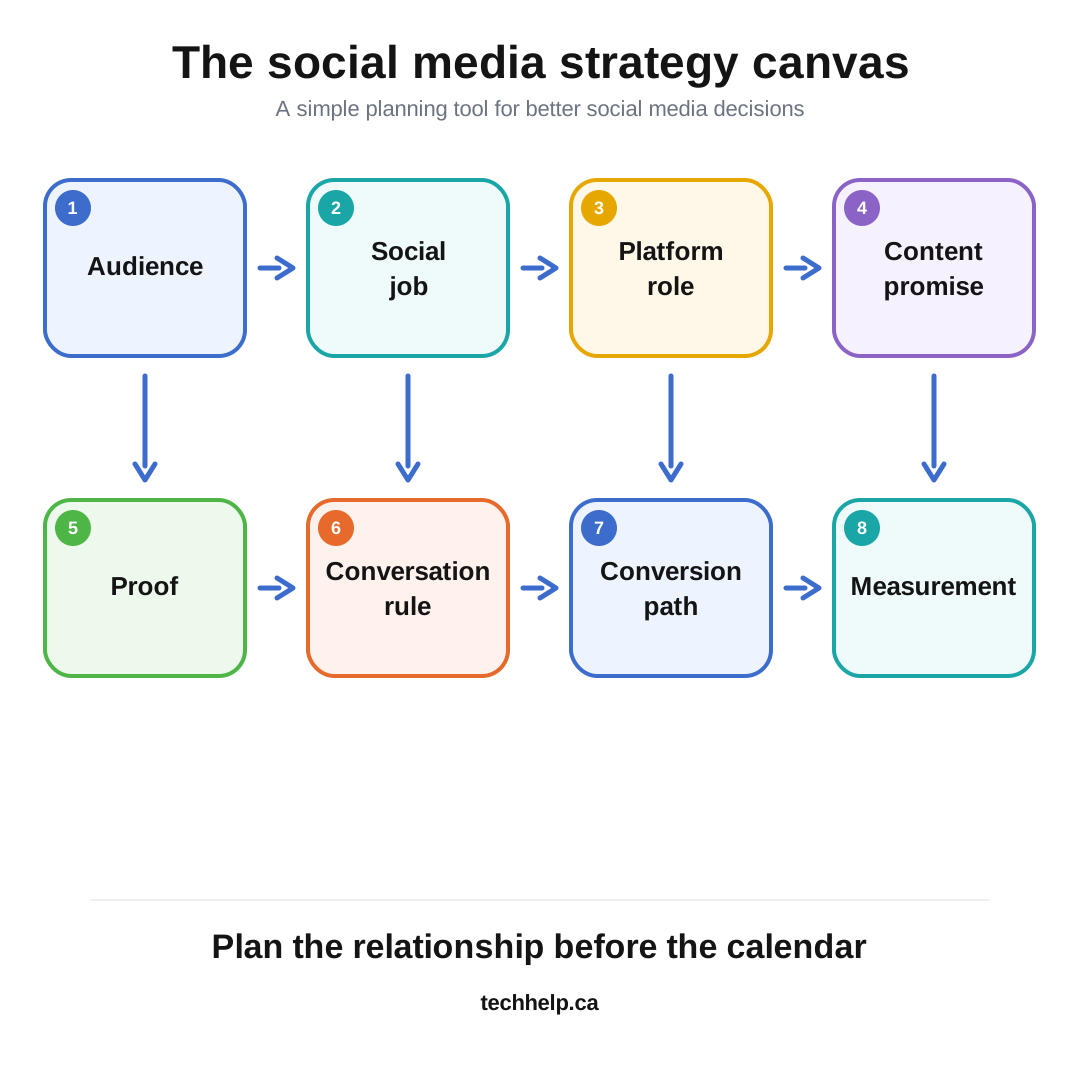
Build your social media strategy canvas
This is the working document your team should be able to use before it opens the calendar.
The content promise is usually where weak strategies reveal themselves.
“We post tips” is too thin. “We help first-time homebuyers avoid expensive mistakes before they make an offer” gives the audience a reason to pay attention. “We post industry updates” is too vague. “We help restaurant owners spot operational issues before they become margin problems” gives the account a job.
The more specific the promise, the easier it becomes to create useful content.
Make the brand feel human without making it messy
The old advice was to automate as much as possible. Schedule the posts, syndicate the updates, push the same message everywhere, and save time.
Scheduling still helps. Reporting tools still help. AI can help with research, drafting options, repurposing, and workflow speed.
But the social part still needs human judgment.
Sprout Social’s 2026 content strategy report found that consumers want brands to prioritize human-generated content, while marketers are under pressure to use AI for efficiency and audience insight. The useful middle is simple: let tools reduce busywork, but keep taste, judgment, and relationship-building with people.
A human brand has patterns people can recognize. It replies with care. It gives credit. It admits limits. It asks better questions. It handles criticism without sounding like a legal memo. It lets a founder, employee, expert, or creator give the account a believable point of view.
For many businesses, this is where employee content, customer care, and brand trust start to connect. Sprout’s 2026 social media research found that 40% of consumers discover a product or service through employee content at least once a month, and 50% are most likely to hear about a brand crisis first on social.
Social media is more than a broadcast channel. It’s a place where people judge how the business behaves in public.
Turn goals into content roles
Once the strategy has a job, content becomes less random.
Each post should have a role. It might attract someone new. It might help a buyer understand a problem. It might prove your team knows the work. It might answer a question that keeps blocking sales. It might give existing customers a reason to stay close.
Goal
Content role
Examples
Awareness
Make the right people notice and remember you
Point-of-view posts, short videos, trend responses, useful observations
Trust
Make your credibility easier to believe
Case examples, process breakdowns, lessons learned, proof-led stories
This is where social and content marketing should support each other. A strong content marketing strategy gives the business deeper material to repurpose. Social media gives that material distribution, feedback, and shorter entry points.
The goal isn’t to turn every blog post into ten generic snippets. The goal is to make each platform useful in the way people already use it.
Create a workflow you can sustain
A strategy fails fast when the workflow depends on constant improvisation.
You don’t need a giant content operation. You need a rhythm that the business can maintain even when the week gets busy.
Start with five operating rules:
A weekly source of ideas, such as customer questions, sales calls, search data, comments, support tickets, or industry news
A monthly set of content themes tied to the strategy canvas
A simple approval process that names who can publish and who needs to review sensitive posts
A response habit for comments, direct messages, reviews, and customer complaints
A reporting cadence that turns performance into decisions
This is also where automation belongs. Use tools to schedule, organize, draft, repurpose, monitor, and report. Keep the actual relationship work close to a person who understands the audience and the business.
If a post earns comments and nobody responds, the strategy is leaking value. If people ask buying questions and the next step is unclear, the strategy is losing useful attention. If the team keeps publishing content nobody can connect to a business goal, the workflow is creating noise.
Measure decisions, not vanity
Vanity metrics can still tell you something. A post with strong reach may reveal a useful hook. A post with many saves may reveal a topic people want to return to. A post with comments may reveal a disagreement worth exploring.
The mistake is letting easy numbers become the goal.
Measure the decision you need to make.
If the question is whether a platform deserves more effort, look at qualified engagement, profile visits, traffic, leads, and sales influence. If the question is whether your message is working, look at comments, saves, shares, direct messages, and recurring questions. If the question is whether social is helping the customer journey, look at the next step after social, not only the post itself.
Our customer journey guide can help you connect social touchpoints to what people need before, during, and after they buy.
A useful report should help the team decide what to keep, what to change, what to stop, and what to test next.
Common social media strategy mistakes
The most common mistakes usually aren’t dramatic. They’re small habits that make the whole effort harder to trust.
Businesses start with platforms instead of audience behavior. They copy competitors without knowing whether the competitor’s social media is even working. They post the same asset everywhere without adapting it to the platform. They measure every post with the same KPI. They create content for attention but forget the next step. They automate the visible parts of the relationship and wonder why the brand feels distant.
Another common mistake is chasing a trend that doesn’t fit the audience or the brand. Trends can help distribution, but relevance still carries the weight. A forced trend may earn a few views while teaching the audience nothing useful about why the business should be trusted.
The fix isn’t more posting. It’s a stronger filter.
Before publishing, ask:
Does this serve the audience we chose?
Does this match the role of this platform?
Does this support the social job?
Does this make the business more useful, believable, or memorable?
Is there a next step if someone wants more?
If the answer is no, the post may be activity dressed up as marketing.
A 30-day social media marketing roadmap
You can build the first version of the strategy in a month.
It won’t be perfect. It shouldn’t be frozen. The point is to stop guessing and give the team a working plan.
Week
Focus
Output
1
Audit the audience and current accounts
Audience notes, competitor observations, top content themes, weak spots
First report, early lessons, tests for the next month
Keep the first roadmap practical. Pick fewer platforms than you think you need. Choose a small number of content roles. Decide which metrics matter before the first post goes live.
The strategy can expand once the team has proof that the work is earning attention from the right people.
Keep the strategy social
Social media strategy gets easier when you stop treating it as a content machine.
The platform isn’t the point. The posting schedule isn’t the point. The relationship is the thing your business is trying to build with people who have choices, questions, doubts, and better things to do than read another generic brand post.
Before your next batch of content, fill out the strategy canvas for one platform.
Decide who you’re trying to reach. Decide what job the platform should do. Decide what you’ll be useful for. Decide how you’ll respond. Decide where attention should go next.
Then build the calendar.
Frequently asked questions
What is a social media strategy?
A social media strategy is a documented plan for how a business uses social platforms to reach the right audience, earn trust, support conversations, and guide people toward a useful next step.
How do you create a social media strategy?
Start by choosing the audience, the business job social media needs to do, and the role of each platform. Then define the content promise, response rules, next step, and metrics before building the posting calendar.
What should a social media strategy include?
A useful strategy should include the target audience, platform roles, content themes, proof points, publishing workflow, response rules, conversion path, and a small set of metrics tied to business goals.
How do I choose the right social media platforms?
Choose platforms based on audience behavior, not habit. Look at where your audience searches, asks questions, compares options, expects support, and engages with brands like yours.
How often should a business post on social media?
A business should post as often as it can publish useful content and respond properly. A smaller, consistent schedule usually beats a busy calendar the team can’t sustain.
How do you measure a social media strategy?
Measure the business decision you need to make. Depending on the goal, useful metrics may include qualified engagement, saves, shares, direct messages, profile visits, traffic, leads, customer questions, and assisted revenue.
Get new small business insights by email
Practical ideas and useful articles to help you make better business decisions.
Tech Help Canada Staff researches, writes, and reviews practical content for business owners and professionals. Our coverage spans business, marketing, SEO, technology, and the tools and systems people use to grow and operate online. We focus on clear, useful information backed by research, hands-on experience, and editorial review. Learn more about our team and editorial standards. Need help with something? Contact Us